May 23, 2006

Flap Disc


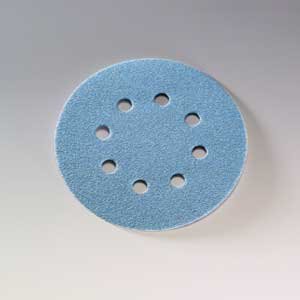
A Flap Disc is the ideal tool for stock removal, grinding and blending of welds, castings and other metal finishing applications! They are available in 4", 4-1/2" and 7" diameters to fit on an angle grinder and grits 40, 60 and 80 are by far the most popular. Abrasive Resource stocks these heavy duty overlap discs in a premium closed coat blue Alumina Zirconia grain designed for metalworking.The backing is made from either a non-flexible, consumable fiberglass in a conical, T-29 shape or a semi-flexible plastic backing on the flat, T-27 shape.

There is a great time savings to be realized from using flap discs compared to the old two-step method of first using a grinding wheel for rough work, then changing to a finer sanding disc for finishing and polishing. A flap disc goes from rough grinding to fine finishing in one operation with a significant reduction in downtime.

For more information on flap discs, or if you would like to try a box out in your shop, visit Abrasive Resource's Online Store at: www.abrasiveresource.com

April 28, 2006

Solid Surface Polishing


When it's time for the Solid Surface Fabricator to polish up the workpiece, he needs to choose between a matte, semi-gloss or high-gloss finish. Whether they are working on a huge retail store or a small bathroom vanity, the process is the same.

The blue aluminum oxide products designed for solid surface sanding from sia Abrasives are available through Abrasive Resource in discs, strips, rolls, sheets and belts of all sizes and configurations. By using this "systems approach" with the same blue line abrasives from beginning to end you maintain a consistent, high-quality finish.

Matte: 120 grit, 180 grit, 280 grit and a maroon siascuff disc
Semi-Gloss: 120 grit, 180 grit, 280 grit, 400 grit and a grey siascuff disc
High-Gloss: 120, grit, 180 grit, 280 grit, 400 grit, 600 grit, 1000 grit and a gold siascuff disc

Why choose sia Abrasives for all your solid surface finishing needs? With more than 125 years of abrasive technology, sia Abrasives is the world's third largest manufacturer of coated abrasives and was recently named an "Approved Vendor" by Dupont on Corian products.

For more information, contact Abrasive Resource at 800-814-7358 or visit their website at: www.abrasiveresource.com

April 19, 2006

Sharpening Scissors

Here's an idea from our "alternative uses for sandpaper" file. To sharpen scissors, simply cut through a piece of fine grit sandpaper! Its gritty surface is SOS for dull scissors and restores the blade to like-new quality so you can snip with ease. For more information on sandpaper and abrasives, check out the Abrasive Resource website: www.abrasiveresource.com

March 31, 2006

Swirl Marks


Swirl marks are, unfortunately, inevitable when you sand with a disc sander. The good news is that there are some tips and techniques to make them less noticeable.
1. Use a disc sander with a vacuum attachment. You want to eliminate as much of the stray grit and dust created as possible while you are actually sanding.

2. Use graduated sandpaper grits. For the best finish you should not skip intervals (even though that is a common practice!) Swirl marks left by a 120 grit disc, for example, won't be as easy to remove with a 180 grit paper as with a 150 grit.

3. In between each grit change, blow off your workpiece with an air gun to clean any stray grit off your work.

4. Don't press down on your sander! Let the weight of the sander do the work--simply guide the sander.

5. Finally, your last step is to hand sand with the same grit you last used on your disc sander. Always use some sort of a block for even pressure and lightly sand in the same direction across your work piece.

Before finishing, set your work light at a low angle across the sanded surface. Wipe with denatured alcohol and any remaining swirl marks will be revealed...
Questions? Comments? Feel free to contact us at:
www.abrasiveresource.com

March 30, 2006

Wet or Dry Sandpaper

Here at Abrasive Resource, we sell sleeve after sleeve of waterproof silicon carbide paper. It's used in almost all of our markets--automotive & marine, cultured marble, woodworking, metalworking, stone, glass, plastic and even rubber!

The history behind this versatile abrasive is an interesting one. A man named Francis Okie, a printing ink manufacturer in Philadelphia, had an idea for a new type of waterproof sandpaper. Okie's idea was for a revolutionary new sandpaper that could be used with water or oil. Wet abrading would reduce the dust hazards created from some of the dry sanding applications and also create a smoother finish.

Francis was so confident of the cutting power of his wet or dry sandpaper, he supposedly kept a piece of it in his club locker and shaved with it before golfing!

In 1921 the 3M Company purchased the rights to waterproof sandpaper from Mr. Okie for $1.00.

Are you using the black SC waterproof paper in your shop? We carry several different brands and would be happy to help you determine which would be best for your application...

Contact Abrasive Resource at: 800-814-7358 or check out our website at: www.abrasiveresource.com

March 29, 2006

How To Sand Moulding

Of course, large production shops have expensive machinery that will sand moulding. For the smaller woodworker, however, there is an easy and basic technique for sanding by hand.

Take a piece of the molding and glue some 80 grit sandpaper to it. Then take some foam insulation board and rub it over the profile, allowing the sandpaper to shape the foam board, creating a reverse pattern.

Once complete, glue a piece of sandpaper (now in the proper grit for finishing) to your new foam board sanding block!

For information on sandpaper sheets that you could use, check out our website at: www.abrasiveresource.com

March 03, 2006

Sandpaper Ballet


Sandpaper is not just for smoothing...it's also used in making music!

Are you familiar with the American composer Leroy Anderson? He was best known for his short, light concert music pieces that are still played at pop concerts around the world. He's probably most well known for the songs "The Syncopated Clock" which was the theme music on The Late Show years ago and "The Typewriter" which included the sounds of a real typewriter in the music.

My favorite however, is of course, The Sandpaper Ballet. Written in 1954, Anderson tries to imitate the sound of soft-shoe dancers as they hoof-it across the old wooden stage that's been sprinkled with sand. The story goes that he rubbed 3 different grits of sandpaper on a block of wood during the piece to get the desired percussive sounds.

Go to Amazon.com and listen to a sound clip. Sandpaper Ballet is #17 on the list. It'll make you smile and maybe even buy the whole CD to listen to!
Leroy Anderson Favorites
If listening inspires you to buy your own sandpaper, visit our website at www.abrasiveresource.com

Basic Sanders

The basic styles of portable sanders haven’t changed very much over the years. We have some old advertising posters from the Rockwell Manuf...